01
Load & energy planning
List running and starting loads, daytime consumption and overnight needs. Roof space, shading and cable routes affect the system design.
Loading BM Contractors
 BM CONTRACTORSENGINEERING · TANZANIA
Solar & battery systems
BM helps assess and install solar power systems around actual consumption, roof or ground space and the intended role of batteries and grid supply. System sizing follows the load assessment.
Discuss your requirements Have a BOQ or institutional RFQ? ↗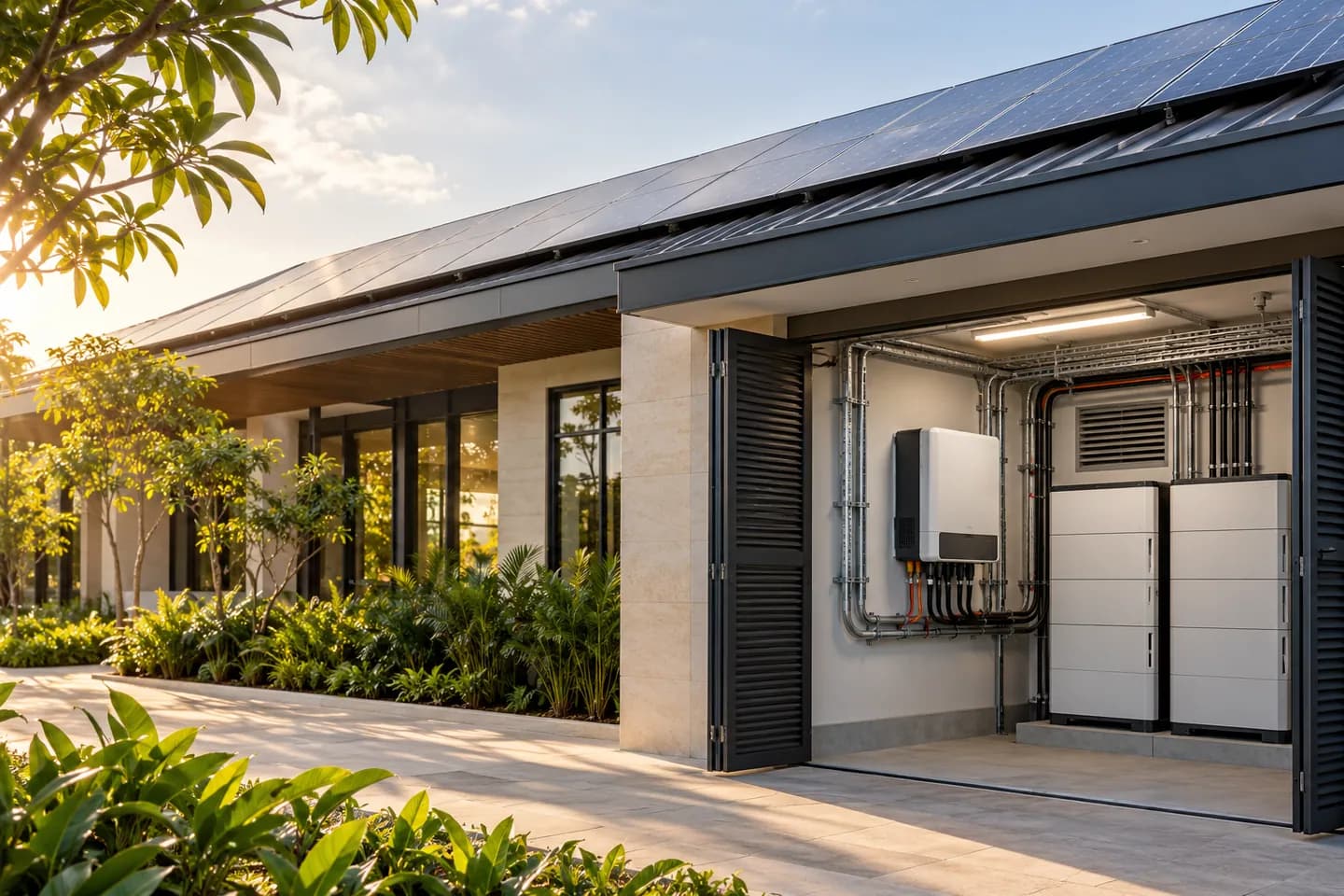
A CONSIDERED SCOPE
Homes, offices and facilities seeking daytime solar supply or a planned combination of solar, battery storage and other power sources.
Your quotation should set out the assessed equipment, installation, documentation and agreed delivery terms.
01
List running and starting loads, daytime consumption and overnight needs. Roof space, shading and cable routes affect the system design.
02
Discuss inverter/battery compatibility, usable capacity, protection and changeover behavior. Ask for a defined operating scenario rather than an unsupported autonomy promise.
EQUIPMENT & APPROACH
Solar modules, mounting system, compatible inverter and battery where specified, DC/AC isolation and protection, cabling and monitoring.
Explore equipment & specification guidance ↗Record appliance power and operating hours, inspect shading and mounting space, then agree usable energy and backup priorities. Installation includes agreed protection, functional checks and user guidance.
Monitor output and alarms, keep access safe and follow manufacturer cleaning and battery guidance. Investigate persistent performance changes rather than assuming more panels will solve them.
THE TECHNICAL BRIEF
Solar PV enquiries need a daily load profile, roof or ground information and a clear decision about which loads must remain powered during an outage.
| Option / application | What to assess |
|---|---|
| PV module selection | Compare exact module technology and datasheet, dimensions, shading and mounting. A higher nameplate wattage does not alone establish daily energy yield. |
| Grid-tied, hybrid or off-grid | A grid-tied system does not automatically provide backup during a power cut. Inverter topology, isolation and supported backup circuits must be explicit. |
| Battery storage | Compare usable energy, chemistry, charge/discharge limits, inverter/BMS compatibility and operating conditions; do not mix incompatible battery types. |
Assess string voltage/current limits, roof suitability, mounting, DC/AC protection, earthing, cable routes and access. Monitoring, documentation and the owner’s shutdown procedure belong in handover.
Plan panel inspection/cleaning access, alarm checks and battery care according to the selected equipment. Generator integration requires verified inverter/charger support and an agreed changeover arrangement; it is not automatic because both sources produce electricity.
List appliances, their demand, operating hours and starting loads first. The design must account for sunlight, shading, losses and backup priorities before a panel or battery quantity can be quoted.
These references help compare systems. They do not establish BM stock, dealership, partnership or model availability. Confirm equipment, compatibility and supply terms in the quotation.
BEFORE YOU DECIDE
That depends on when power is needed and whether backup is part of the requirement. Daytime consumption and power-cut needs should be assessed separately.
Share its exact model and battery details. Electrical compatibility and manufacturer requirements must be checked before integration is proposed.
BRING US YOUR BRIEF
Images labelled AI illustrate services; they do not show actual BM projects, employees or clients. Models, prices, availability and technical requirements are confirmed in the quotation.